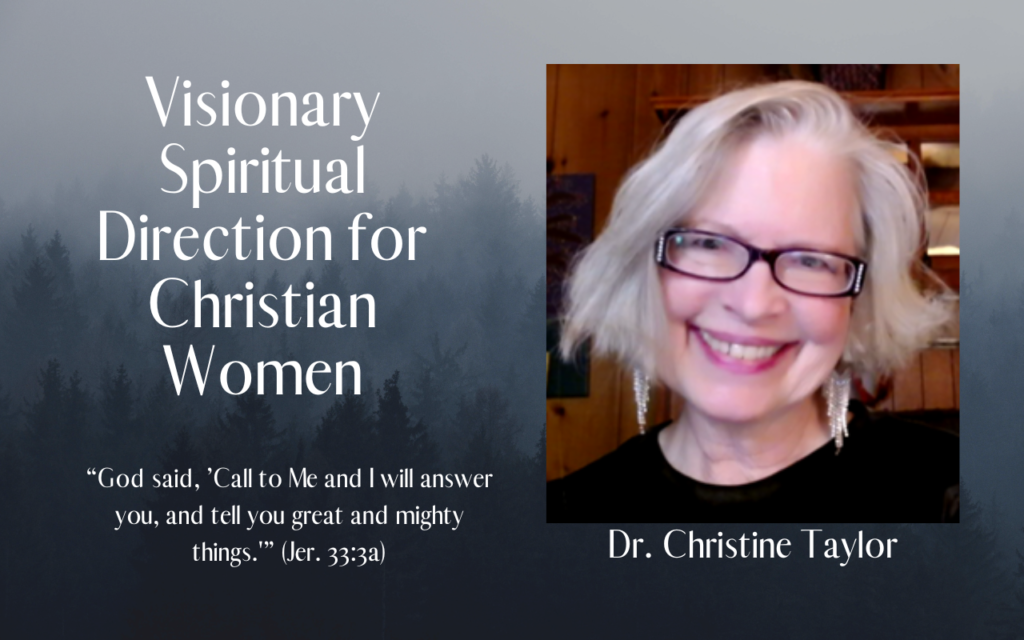
I’m visionary spiritual director Dr. Christine Taylor.
I guide Christian women into amazing adventures in Christ:
clarity of purpose,
healing spiritual blocks,
and the joy of the Lord that is our strength.
What Is Visionary Spiritual Direction?
Christian spiritual direction is a Holy Spirit-directed mentoring relationship between a client who wants to grow and realize their vision and mission from God; and a director who is educated and experienced in the process of spiritual formation.

Visionary spiritual direction is how I work with my clients: using contemplative Christian practices like imaging prayer to hear the “still small voice of God”. If you ask and listen, you will encounter His love and leading for guidance, healing, and joy.
Testimonials

“Definitely connect with Chris Taylor. It’s life changing and transforming. She helped me achieve breakthroughs and to see God at work every day in my life and business.” (Shawnee Penkacik)

“Chris’s imaging prayer group is such a unique experience! Every week I experience deep ah-ha moments, words and wisdom from God. As she facilitates our sessions, she offers insight and leadership and allows those on the call to use their own gifts and ability to hear from God for each other. Her humility and transparency is such a breath of fresh air in the current coaching climate.” (Sue Brage)

“My session with Chris was amazing. I was pretty much at a crossroads, and trying to figure out if I was hearing God correctly, regarding a decision I was making. Chris served as a guide, never forcing me to see anything other than what I saw, and helping me get clarity on it all.
I left the session with confirmation of how to proceed, and feeling so affirmed by the God who cares about every detail of my life. I recommend these sessions for everyone! (Emem Washington)

“Chris has a gift for seeing pictures of what God is speaking over others when she spends time with them. If you are struggling with quieting your mind to hear the Holy Spirit, she can help you. It was super cool to see the picture she had brought to the meeting was very similar to a dream I had several months ago that she did not know about. It was a confirmation I needed today.”
–Jeanie King

“Chris helps usher in the power of the Holy Spirit into the space. She sets the tone by reminding me not to force the experience, just let it happen the way the Lord wants to. She helps you get to a place of peace before you begin so the Spirit can flow. I highly recommend working with Chris and seeing what the Lord has for you! I always leave encouraged, and more in love with and connected with Jesus!”
–Lori Lewis Koors
Who’s Dr. Christine Taylor?

In spiritual direction, books, and courses, I combine creativity, storytelling, prophecy, and Biblical expertise to help my clients transform their faith walks from plodding to flying.
I have my Masters in Biblical studies, decades of Bible teaching, my doctorate in spiritual formation, and a passion for living life in Christ.
Trust God to guide you. Let God heal your heart and mind as He breaks spiritual strongholds. Experience the joy of the Lord, which is your strength.